
You Don't Need to Become a Marketing Person. You Need a Marketing Person.
A friend of mine texted me at 9pm on a Sunday. She runs a local retail business, she is great at what she does, and her text went something like this: "Hey, quick question: what should my Instagram strategy be? Like how often should I post, and what kinds of posts? I feel like I'm doing it wrong."
I stared at my phone for a full minute.
Not because the question was hard. Because the honest answer is so layered that it doesn't fit in a text message. The honest answer is: it depends. It depends on who you're trying to reach, what you sell, whether you're trying to grow an email list or warm up a referral network or position yourself for a speaking circuit. It depends on your voice, your offer, your sales cycle, your bandwidth, and what you've already tried.
The honest answer is a 45 minute conversation. Maybe two of them. Followed by a strategy document and probably a content calendar.
The honest answer is not a text reply at 9pm on a Sunday.

You are not supposed to know this stuff
Here's the thing I want you to hear, because I know you have sent that text. Maybe not to me. Maybe to a friend who works in marketing, a Facebook group full of other entrepreneurs, or a paid course you bought in a moment of panic at 11pm and never finished.
You are not supposed to know the answer.
You are not supposed to wake up one day with an instinct for funnel architecture, email segmentation, and the precise reason your website bounce rate is quietly creeping up. You didn't start your business because you wanted to become a marketing strategist. You started it because you are exceptional at the thing you do: the lawyering, the consulting, the coaching, the wealth management, the bookkeeping. That is your zone of genius. The world needs you in it, doing that thing.
And yet, here we are. You're spending your Sunday nights Googling posting frequencies and reading blog posts about hashtag strategy because somewhere along the way, you got the message that a "real" business owner just figures this stuff out.
You didn't open a restaurant because you love doing payroll. You didn't launch a law firm because you enjoy designing your own letterhead. Marketing is no different.
Every professional discipline has a learning curve. Marketing is not magic, but it is a craft, and it takes years to develop fluency in it. The same way you wouldn't expect a marketer to draft contracts or manage a client's investment portfolio, you shouldn't expect yourself to intuitively know how to build a content strategy that actually converts.
The course-buying spiral and why it doesn't work
Let's talk about what most of us do instead of asking for real help: we buy courses. We sign up for webinars. We follow seventeen Instagram accounts from people who promise that if you just post fifteen reels a week, everything will fall into place. (When do you have time to make fifteen reels a week? Be serious.)
The problem with this approach isn't that the information is bad. Some of it is genuinely good. The problem is that generic marketing advice cannot account for the specific shape of your business, your audience, your offer, or your voice. A social media framework designed for a product-based e-commerce brand looks completely different from the strategy a boutique consulting firm needs. A content calendar built for a B2C lifestyle brand should not look anything like the one built for a B2B service provider.
Generic advice fills your head with tactics and leaves you with no strategy.
Think of it this way: if your car's check engine light came on, you wouldn't watch a series of YouTube videos and then start randomly replacing parts hoping something worked. You'd take it to a mechanic who could run the diagnostic, tell you exactly what was wrong, and fix the specific problem. Marketing is the same. You don't need more information. You need someone who can look at your specific situation and tell you what it actually needs.
What "having a marketing person" actually looks like
A lot of people think of brand and marketing support as a one-time transaction: you hire someone to build a logo, or refresh your website, and then you're done. That's not how sustainable marketing works. And it's not how I work. When you have the right marketing support, here's what changes:
Your brand sounds like you everywhere, not just on one platform
Your Instagram captions sound like your homepage. Your homepage sounds like the email that just went out to your list. That email sounds like you on a discovery call. This consistency isn't a nice-to-have aesthetic choice. It is the entire reason people decide to trust you enough to hand over money. When someone encounters your brand in five different places and it feels like five different businesses, that inconsistency creates doubt. Doubt kills conversions.
Your content actually does something
There's a difference between content that exists and content that works. Blog posts that are optimized for search and written to nurture a specific audience segment do something for your business. Blog posts that sit pretty on your website because you felt like you were supposed to have a blog? Those are just digital noise. The strategy behind the content is what makes the difference between a post that gets bookmarked and a post that gets forgotten.
Your marketing builds trust over time, not pressure in a single moment
Most service-based business owners rely on networking, referrals, and one-on-one conversations to close clients. That works, until it doesn't scale. An email nurture sequence, a content strategy built around your specific sales cycle, a consistent social presence that warms up your audience before they ever book a call…these are the systems that turn a curious lead into a paying client over six weeks instead of six minutes of pressure at the end of a discovery call.
The thing sitting on your to-do list right now
You have one. Maybe it's been there for three weeks. Maybe three months. It might be "write website copy." It might be "figure out what to actually post on LinkedIn." It might be "send a newsletter." It might be something vaguer, like a general sense that your brand doesn't look or feel like the level of business you're actually running.
The reason it keeps getting pushed to the bottom of the list isn't laziness. It's not even busyness, really. It's that you don't know where to start, and when you don't know where to start, your brain will find twenty other things to do first. Starting is the hardest part when the task feels undefined.
Naming the specific thing is often the first step toward actually solving it. What is the marketing task that is quietly stressing you out the most right now? If you can name it out loud (or type it out) you've already made progress.
You go back to running the business you're actually a genius at. That's the whole point.
And before you assume this is just me yapping about marketing strategy, here's some real proof of what happens when a business owner stops trying to do this alone. This is what happened to one client's web traffic and email open rates after we rebuilt their email nurture sequence and dialed in their brand voice.
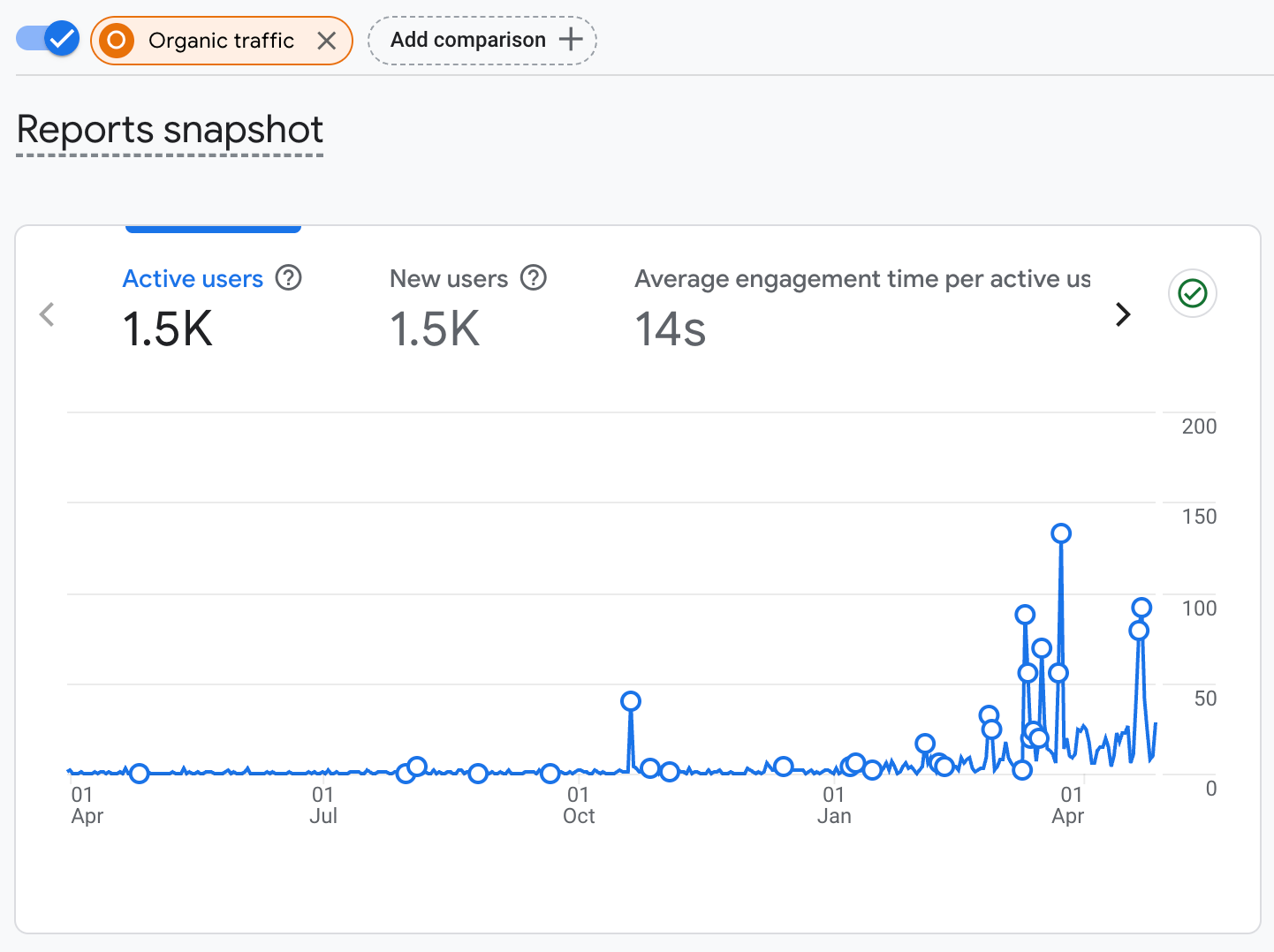
We started working together in January.
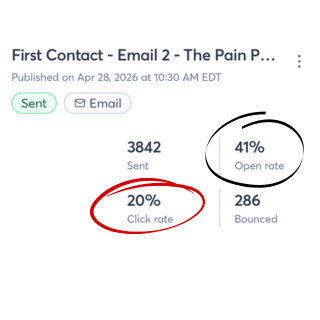
What working together actually looks like
We start with a real conversation; not a discovery call designed to close you, but an actual conversation where I listen for the soul of what you're building and the specific shape of what you're stuck on. Then we build a plan together. Then I do the work: the design, the copy, the strategy, the consistency across every platform you're trying to keep alive.
The goal is that you stop being the person who sends panicked Sunday night texts about your Instagram strategy. Not because you've learned enough to answer those questions yourself, but because someone else is already three steps ahead of you on the plan you built together.
Ready to get that thing off your list?
Start by naming it. What's the marketing task that's been sitting there the longest?
Want to chat through it? Click here to work with me.